



 4 / 17

Page 4
Towards an international
research program on soil carbon
sequestration and food security
The meeting took place on 25 June following
the LRG meeting in Lodi and was co-chaired
by Jean-François Soussana (SCNC), Martin
Scholten and Harry Clark, with strong
support from the LRG’s Grasslands Research
Network. It was attended by 27 participants
from 11 countries and also included
participation from the Alliance’s Croplands
Group and Inventories & Monitoring Cross-
Cutting Group.
Theworkshopaimedtohighlightthetechnical
potential of soil carbon sequestration to
reconcile climate action and food security.
The ambitious target proposed by the French
Government of sequestering annually an
additional 0.4% (4 per mil) of the current
soil organic carbon stock per year and its
applications to grassland systems, and
the potential role of the GRA in supporting
this goal through a coordinated research
programme, was discussed. Challenges
for research were then assessed, including
uncertainties, technical potential of good
practices, upscaling, monitoring and
verifying the changes in soil organic carbon
stocks. Updates on these topics were
provided by the LRG’s Grassland Network
and by the SCNC, Croplands Group and
Inventory & Monitoring Cross-Cutting Group.
Opportunities for collaboration with other
initiatives were identified, such as the Global
Agenda for Sustainable Livestock, CCAFS,
the manure management component of the
CCAC’s Agricultural Initiative, the Global
Soil Partnership, the Global Carbon Project,
AgMIP, FAO and UNEP. A side event at the
‘Our Common Future under Climate Change’
science conference took place in Paris on
7 July to further explore these opportunities.
The
workshop
concluded
that
an
international research program could help
with designing national and local action
plans on soil C sequestration by providing
technical and socio-economic packages
of methods, procedures, options and their
technical potentials, costs and benefits,
while contributing to capacity building. To
this end, different steps were identified:
i. Reference databases (assembling and
testing site data with grassland/livestock
practices to assess impacts on carbon
sequestration, plant & animal productivity,
GHG balance)
ii. Methods for identifying baseline changes
in soil organic C stocks, mapping the
potential of good practices, developing
abatement cost-curves and indicators
iii. Low cost monitoring, reporting and
verification methods with their associated
uncertainty with focus on both soil carbon
sequestration and stabilization.
Next steps will be discussed during the
Research Group Co-chairs teleconferences
and at the Alliance Council meeting in
September.
For more information on the development
of this research program, please contact
Jean-François Soussana
(
Jean-Francois.
Soussana@paris.inra.fr ).
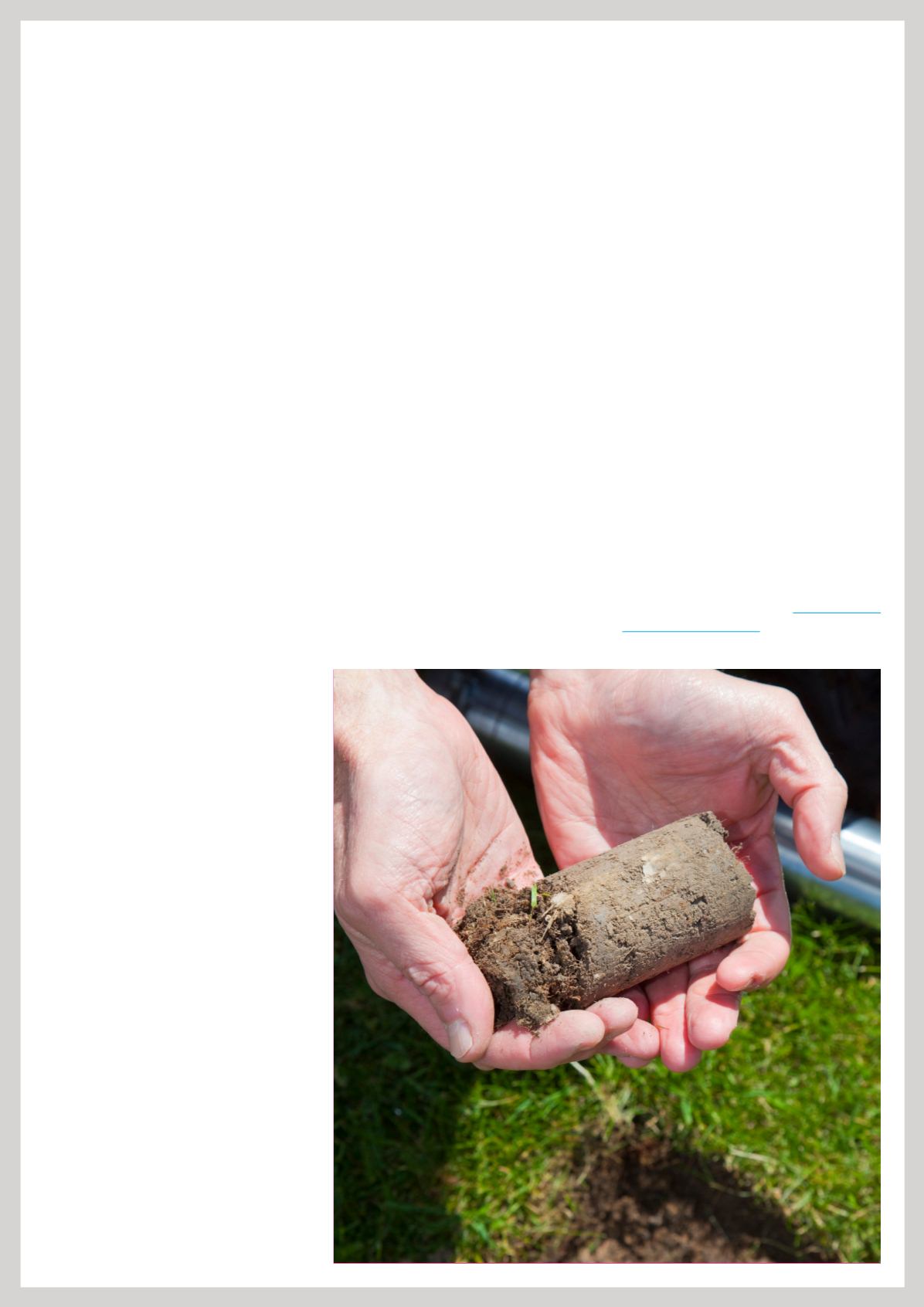
In support of the French government’s call for an international research program on soil carbon sequestration
(announced at the third Climate Smart Agriculture science conference in March 2015), the LRG and the GRA’s Soil
Carbon & Nitrogen Cycling Cross-Cutting Group (SCNC) organized a joint meeting to discuss the development of a
dedicated GRA research program on soil carbon sequestration and its application to grassland systems.