



 6 / 17

Page 6
An important breakthrough has been made in the global search for solutions to reduce emissions from livestock.
New Zealand scientists have identified five compounds that significantly reduced enteric methane emissions in
sheep fed a grass-based diet in initial short-term trials, providing a potential technology that could significantly
reduce agricultural greenhouse gas emissions.
The project leader Dr Peter Janssen,
who coordinates New Zealand’s methane
research programme, says the findings are
the culmination of five years of work during
which the team screened more than 100,000
compounds
through
computer-based
searches and in laboratory experiments. The
screening process identified five compounds
that have now been tested successfully in
sheep and resulted in reductions of methane
emissions from 30% to more than 90% over
a two-day period.
The rumen is the first and largest part of the
multi-chambered stomach of grass-eating
ruminant animals, including sheep and
cattle. It acts as a fermentation vat where
microbes break down the cellulose in the
plant material to make it digestible. One
group of rumen microbes, the methanogens,
takes up surplus hydrogen and produce
methane.
The team made use of genetic information
that became available when the first
complete genome of a methanogen was
published in 2010. Of the roughly 500
known genes, the team focused on finding
compounds that would inhibit the function
of those that are known to be involved in the
Significant step towards reducing
methane emissions from livestock
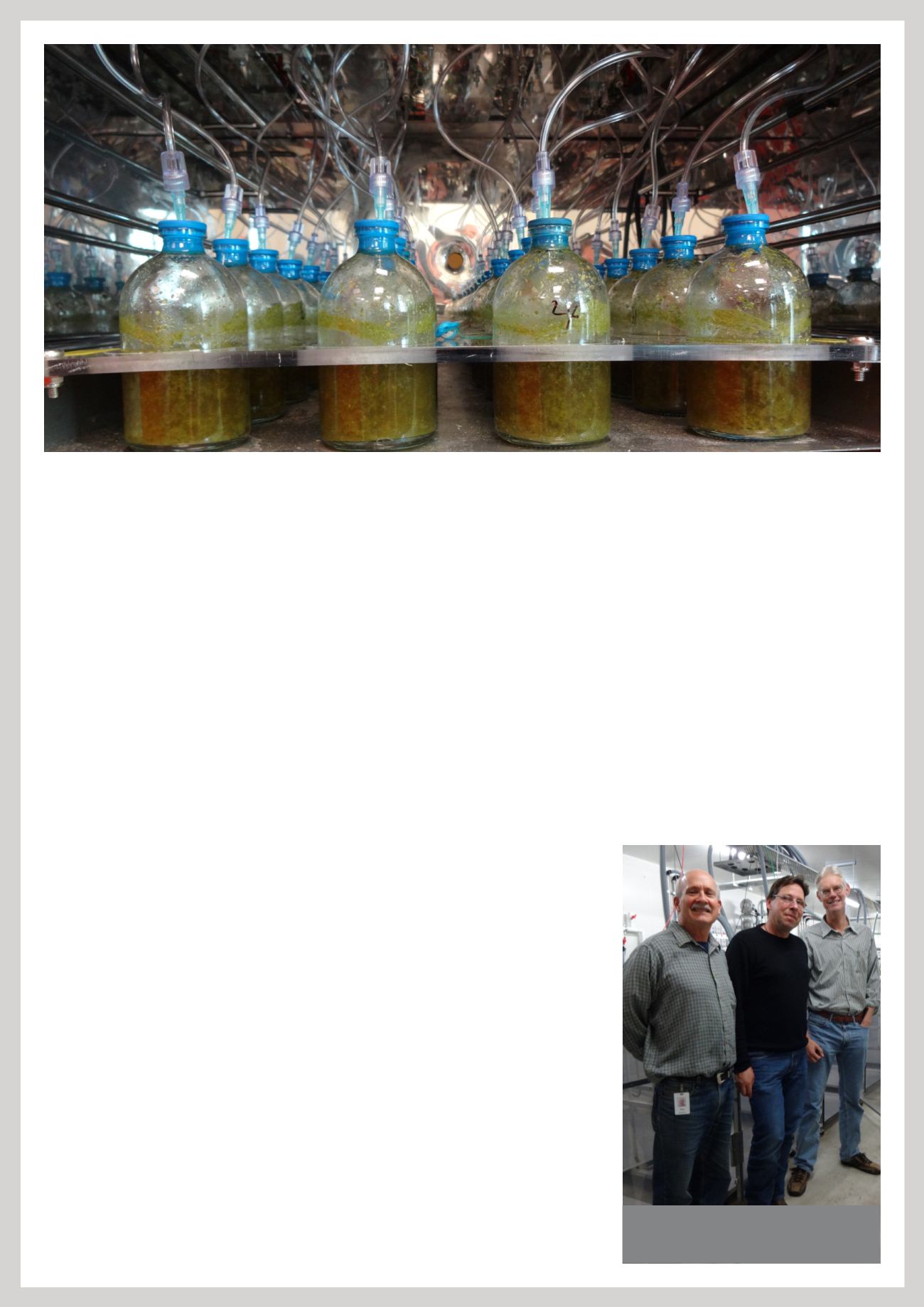
production of methane. Screening thousands
of potential compounds in the laboratory and
then testing the most promising inhibitors in
sealed containers of real rumen fluid meant
the discovery process could be dramatically
scaled up. Each of the five compounds had to
pass toxicity tests before they could be tested
in sheep in respiration chambers where
changes in methane emissions as well as
feed intake could be precisely monitored.
“The intention is toonlyhit themethanogens,”
says Peter Janssen. “The nice thing about
the way the programme is structured is that
the last major test before the compounds
go into the animal is to test them in rumen
contents that have been taken from an
animal. If it has a general impact on other
microbes in the system, then you see that
the whole fermentation shuts down. If it’s
only affecting the methanogens then you
see that the fermentation continues just like
normal, and it’s only the methane part that is
affected. If it then passes subsequent toxicity
testing then we know we can safely try it in
an animal.”
It is early days for the results with further
and larger-scale trials needed to test if the
inhibition effect lasts long-term, whether
there any effects on productivity, and to make
sure there are no residues in meat or milk.
The team aims to have a farm-scale product
available in five years and is optimistic that
this can be achieved given these exciting
early results.
New Zealand scientists leading the work to
develop a methane inhibitor: Ron Ronimus,
Stefan Muetzel and Peter Janssen
© Veronika Meduna / Radio NZ
© Veronika Meduna / Radio NZ