



 7 / 17

Page 7
Collaborating on global
agricultural mitigation potential:
an update on progress
In the last LRG newsletter we reported on the new collaboration between the Food and Agriculture Organization
of the United Nations (FAO) and the LRG to better quantify global agricultural mitigation potential and
identify opportunities for regionally appropriate interventions that support livelihoods, food security and reduce
emissions intensity.
The project started in February 2015 when
Victoria Hatton (NZAGRC) moved to the FAO
in Rome to take up the position of Project
Activity Coordinator and has been proceeding
until now with funding from the New Zealand
Government.
On 1 July, the project received a significant
further boost through a successful project
supported by the Agriculture Initiative of
the Climate and Clean Air Coalition (CCAC).
Support from the CCAC will take the project
to the next level by developing intervention
packages that are tested and critiqued by
local experts. This will critically rely on the
LRG’s extensive research networks as well
as FAO technical support and experience
in promoting agricultural practices to
enhance food security and improve farmer
livelihoods. Facilitating this kind of practice
change on the ground and elevating the
issue to national governments is critical to
mobilise change.
What has been happening?
The project is initially focusing on three
regions: Latin America, East Africa and South
Asia. Recently the first of three regional
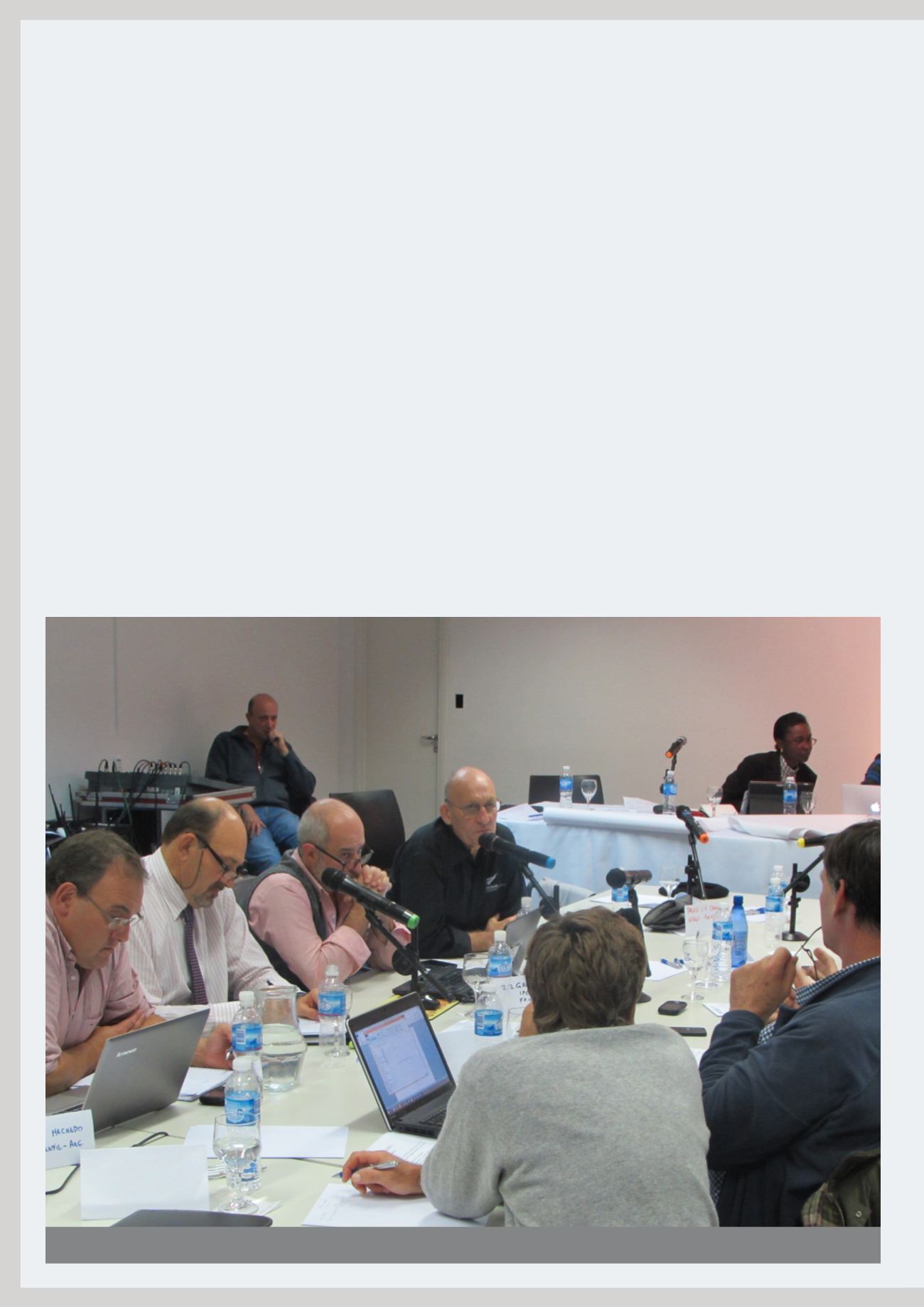
workshops was held. Twenty participants
from science, policy and livestock extension
services from Argentina, Uruguay and
Brazil were kindly hosted in Buenos
Aires, Argentina by the Instituto Nacional
Tecnolgie Agropecuario (INTA) from the
26-27 May. Uruguay, Argentina and Brazil
are globally significant beef producers;
representing 31% of global beef production.
Of course this is not without its challenges.
Indeed there is a large proportion of
Discussions during the workshop at INTA in Argentina in May 2015