



 2 / 12

Page 2
A flagship collaborative LRG project led by
New Zealand, the “Global Rumen Census”,
analysed the microbes responsible for
methane emissions from a wide range
of ruminant animals around the world.
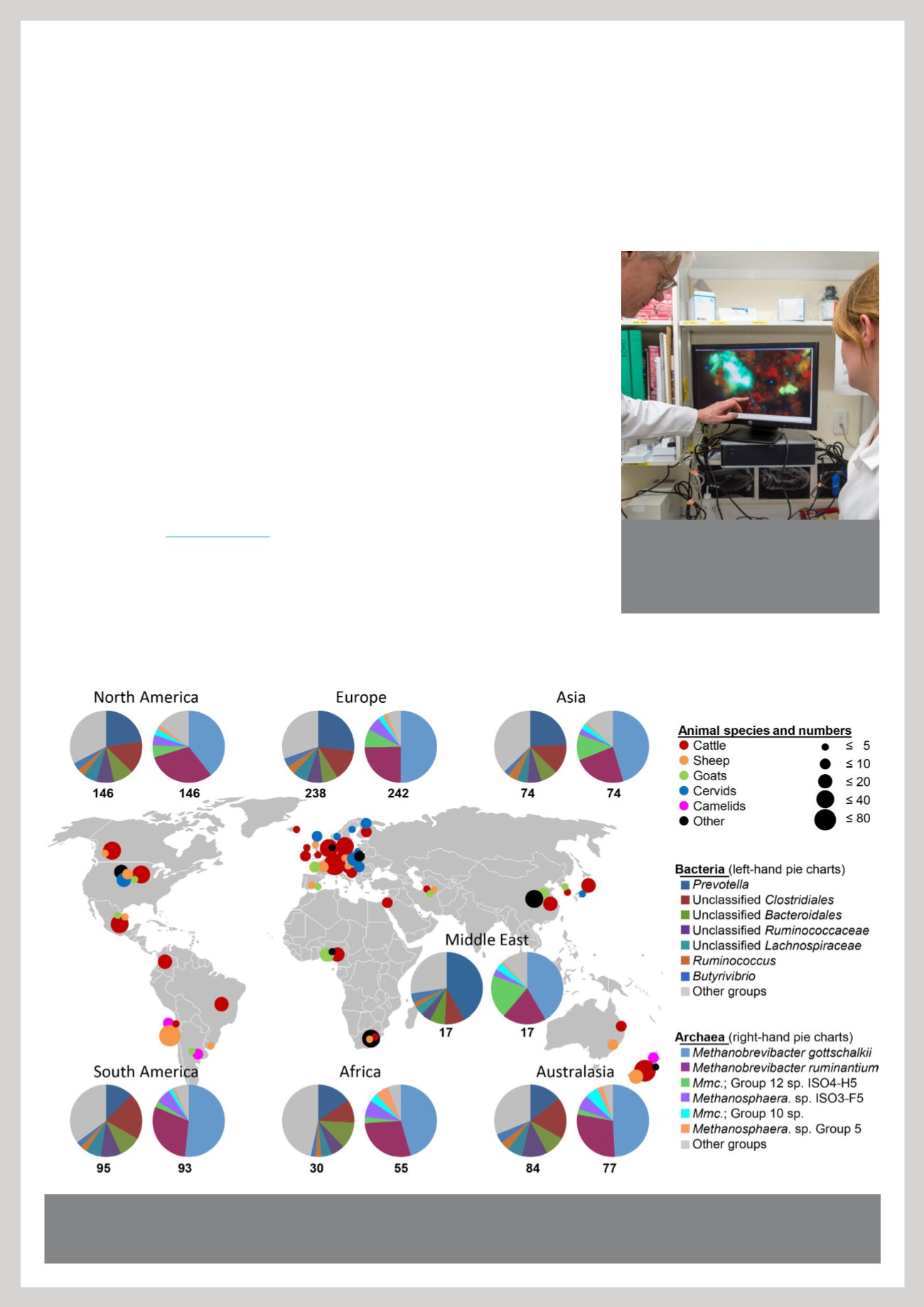
The project found similar bacteria and
methanogens dominate in nearly all rumens
across a wide variety of species and animal
diets. This means that new technologies
that seek to reduce methane emissions by
influencing rumen microbes should have
global applications.
The results of the Global Rumen Census
were released on 9 October 2015 in the
open-access journal
Scientific Reports
.
Gemma Henderson and Peter Janssen of
AgResearch, New Zealand’s largest Crown
Research Institute, led the project with 140
scientists from 73 organisations around the
world contributing microbial samples over
two years.
“We initially thought it would attract about
200 samples but the international interest
was immediate and quite large. The sample
pool grew to over 900 and we selected 742
of those samples to include in the project,”
says Henderson.
“It was an honour to be involved with such
a successful global collaboration. One of
the most exciting things for me was the
enthusiasm generated internationally with
so many people being interested in what we
were doing and wanting to contribute. That
was very rewarding.”
The strength of the study lies in the diversity
of samples collected, with animals from the
Slovenian mountains to remote islands off
the Chilean coast. As well as the expected
samples from sheep, cattle, deer and goats,
there were also some from buffalo and
giraffes.
Origins of samples and their bacterial and archaeal community compositions in different regions.
Numbers below pie charts represent the number of samples for which data were obtained.The most abundant bacteria and
archaea are named in clockwise order starting at the top of the pie chart.
Global solutions to reduce methane emissions from ruminant animals are feasible, because the microbes causing
the emissions are similar around the world.
Global Rumen Census project
delivers groundbreaking results
Rumen sample: A view of rumen contents
through a fluorescence microscope. The
small blue cells, identified by Peter, are
methanogens.