



 11 / 14

Launch of the SF
6
Tracer Technique
Guidelines
Sulphur hexafluoride (SF
6
) is
an inert gas that has a very low
concentration in the background
atmosphere. Such properties have
made SF
6
a tracer of choice in air-
dispersion experiments and indoor
ventilation studies over several
decades.
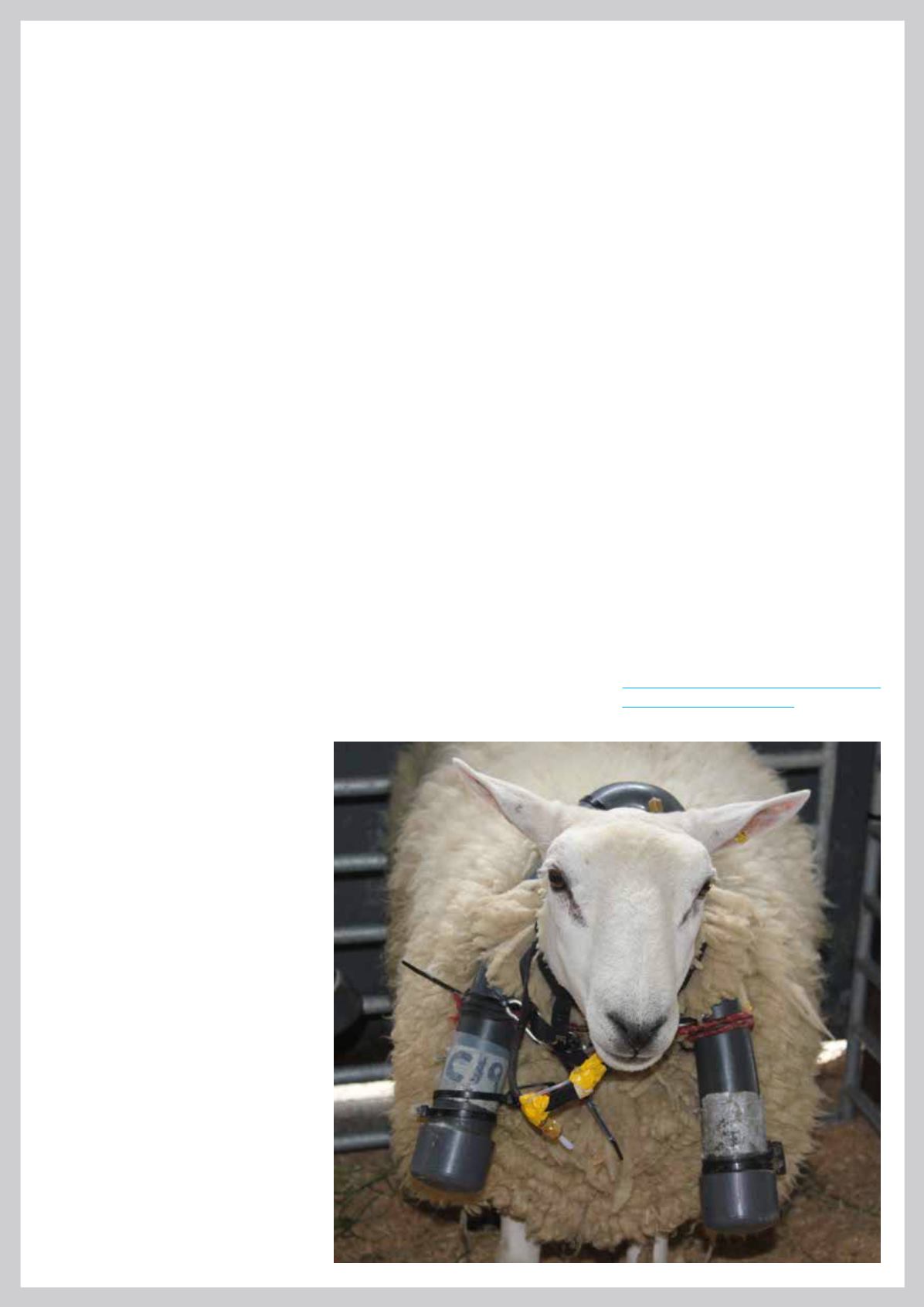
SF
6
was first recommended as a tool to
quantify bovine ruminant CH
4
emissions in
1993 by a research team at Washington State
University, who published their seminal
paper in 1994. The technique has since been
adapted to measure emissions from sheep,
alpacas and deer, and emission estimates
using the technique compare favourably
with those using respiration headboxes and
chambers.
The SF
6
tracer technique enjoys wide
acceptance, but with a variety of
implementations. This variety arises from
different equipment and hardware designs,
and variations in innovative hardware
developments, as well as differences in
experimental protocols and data analysis.
The
“Guidelines
for
use
of
sulphur
hexafluoride
(SF
6
)
tracer
technique
to
measure enteric methane emissions from
ruminants”
offer a comprehensive, citable,
peer-reviewed reference to the theory and
practice of the SF
6
tracer technique.
The guidelines present the combined
expertise and experience of leading
practitioners from around the world and
recommend standard and/or best practice
approaches without being prescriptive: a
recognition that the approach chosen will
reflect the particular circumstances of the
experiment, such as the availability of skills
and equipment, or the nature of the national
livestock industry.
The guidelines are written to help
researchers:
• Understand the fundamental principles
behind the SF
6
tracer technique, and the
concepts around its effective use.
• Get up and running as quickly as
possible with minimal experience of the
technique (aided by the technical manual
by Johnson et al. (2007)).
• Decide on an implementation, or adapt
an existing implementation, to suit
their circumstances (access to skilled
personnel or laboratories, etc)
• Cite a specific implementation, and
credit its developer(s), rather than having
to detail that implementation in a paper.
• Tap into the collective wisdom of
researchers experienced in applying
and/or adapting the technique.
The guidelines are the output of a project
funded by the New Zealand Government. The
contents are the collated work of individual
scientists in Alliance member countries.
The contributions from these scientists,
their institutions, and funding agencies
are gratefully acknowledged, and warm
thanks extended for their contribution to the
guidelines.
The guidelines can be downloaded at
globalresearchalliance.org/research/ livestock/activities/knowledge