




 3 / 12

Page 3
amount of enteric methane produced per
kg of dry matter or per kilojoule of gross
energy consumed. Farmers and national
statistics have a much better chance of
reporting how much their animals eat on
average, and thus to capture changes in
emissions and emissions intensity over
time. More importantly, the only chance to
reduce emissions in Tier 1 inventories is
to reduce the number of animals, whereas
Tier 2 inventories allow countries to report
reductions in emissions intensity arising
from increased productivity. Advanced
inventories thus demonstrate a win-win
for agricultural and economic development
goals and reducing the amount of emissions
per unit of food produced.
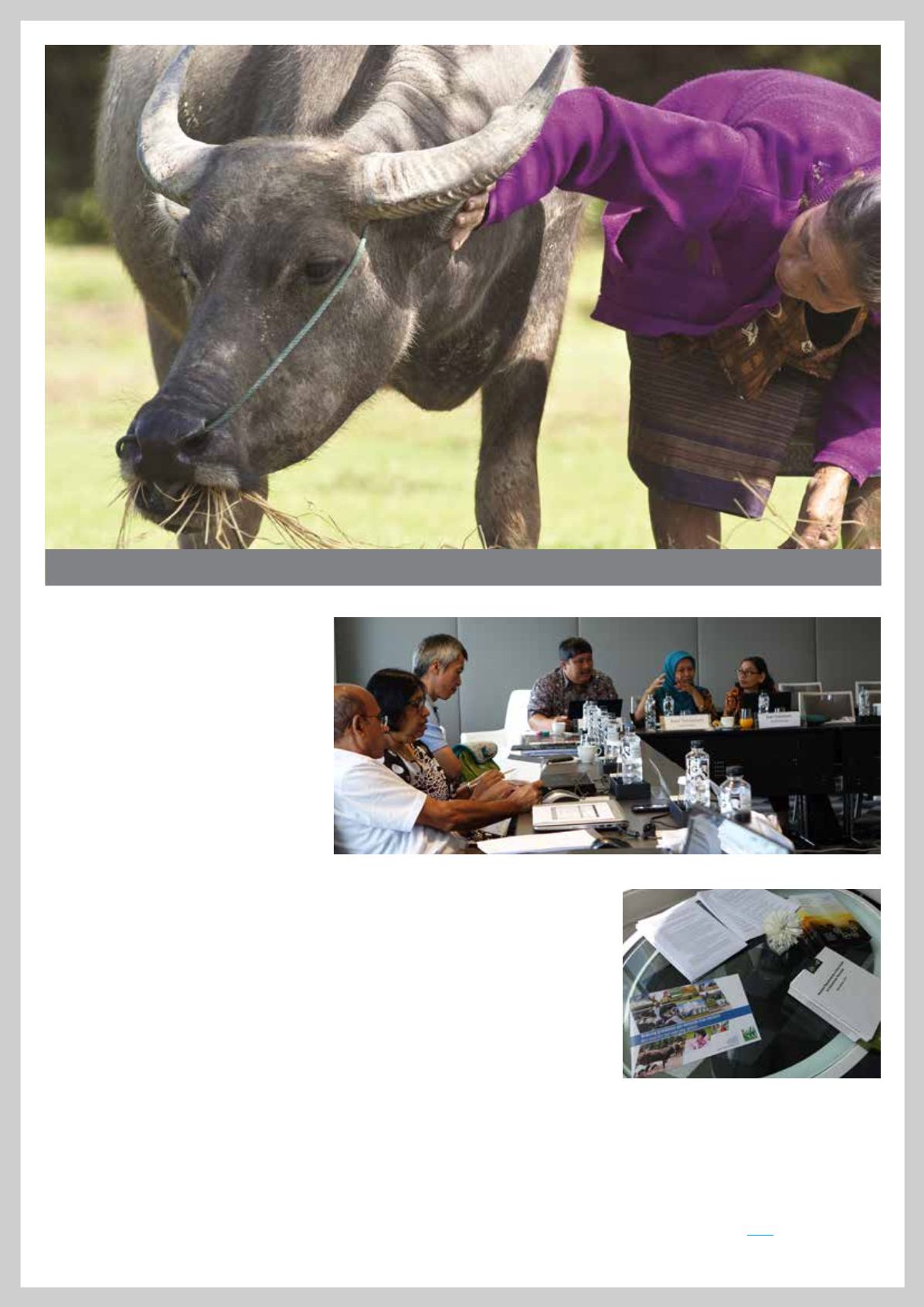
A workshop held in September 2015 in
Bangkok explored the potential benefits,
challenges and next steps for countries
interested in developing Tier 2 inventories
for livestock systems in South-East Asia. The
workshop was hosted by the Government
of Thailand and funded by the Government
of New Zealand in support of the LRG.
Representatives from science and policy
organisations from Indonesia, Malaysia,
Philippines, Sri Lanka, Thailand and Vietnam
participated, supported by experts from
Canada, Colombia, Japan and New Zealand.
The workshop explored the principles
underlying Tier 2 inventories and the ways
in which national climate and development
goals could benefit from advanced
inventories to monitor and report their
emissions. Countries then determined
priority emission sources and developed
initial structures for Tier 2 inventories for
those sectors, and scoped the minimum
data required to turn such inventories into
reality. While scientists and policymakers
are often concerned about the complexity
and data needs of advanced inventories, a
key message from the workshop was that
Tier 2 inventories do not have to be much
more complex and do not necessarily require
many more measurements than Tier 1
inventories. Rather, they can help countries
identify priorities for measurements and
start a process of gradual and continuous
improvement.
The workshop closed with countries
setting out their next steps to develop their
inventories further. A follow-up workshop is
planned for July 2016, which will be hosted
by the Government of Indonesia. A report
of the workshop with next steps for each
country can be found
here .Laotian woman tends to a water buffalo.