




 4 / 12

Page 4
Nicely complementing the September workshop on advanced inventories,
the Food and Agriculture Organisation (FAO) hosted a workshop from
19-20 November also in Bangkok entitled “Making the UNFCCC work for
Agriculture in Asia and the Pacific”.
The two-day workshop explored how
mechanisms set up under the UNFCCC can
be used to support countries’ agricultural
development goals by better leveraging
the UNFCCC framework to deliver climate-
resilient, low emissions development
in the agriculture sector (comprising
crops, livestock, forestry, fisheries and
aquaculture).
Representatives
from
Ministries of Agriculture, Environment
and other relevant sectors in 15 countries
across Asia and the Pacific participated in
the meeting, supported by experts from FAO,
UNFCCC, CGIAR technical centres, other
UN partner organisations, and national and
regional research institutions.
The workshop heard presentations, hosted
discussions and encouraged countries
to develop specific project ideas relating
to
Intended
Nationally
Determined
Contributions (INDCs) to a future climate
agreement, climate finance mechanisms to
support agricultural development, technical
challenges and ways of addressing them,
and key ways for countries to increase their
involvement.
Key messages from the workshop included:
• While the agriculture sector in Asia and
the Pacific is at risk from climate change,
finding ways to reduce emissions from the
agriculture sector will be an important
way to achieve the global 2°C target
• Current workshops and discussions in
the UNFCCC Subsidiary Body on Scientific
and Technological Advice (SBSTA) are
an important way for countries to draw
attention to key issues for the agriculture
sector in the region
• INDCs have provided an important
opportunity to highlight priority actions
that countries can take to promote
resilient and low emissions development
in the agriculture sector
• Coordination among Environment and
Agriculture Ministries will be essential
to ensure that the specific opportunities
for agriculture are properly reflected in
future contributions
• There is a role for international
organisations to support Agriculture
Ministries to engage with UNFCCC
processes and international climate
financing schemes
One issue discussed in the workshop was
that low emissions agriculture development
can run alongside economic development
through increasing agricultural productivity.
Indeed, many of the specific project ideas
put up by participating countries relating to
mitigation outcomes focused on increasing
productivity and yields per animal or
per hectare. But a common theme was
that quantifying the resulting emissions
reductions (and attracting climate finance to
help achieve such reductions) was difficult
within current inventory and reporting
systems, which in most countries rely on
Tier 1 inventories and thus leave a much
smaller set of policy options.
The LRG’s capability building programme (in
conjunction with GRA partners such as FAO
and CCAFS), is an important bridge between
policy and science. It is helping identify
country-specific opportunities to improve
productivity, and ensuring that resulting
changes in emissions intensity can be
documented through advanced inventories.
The
workshop
agenda,
participants,
presentations and country posters/projects
can be found
here.
Making the UNFCCC work for agriculture
Reducing the emissions
intensity of agriculture:
Uruguay’s INDC
The INDC submitted by Uruguay
provides a great example of a country
linking its development goals with
climate targets. The INDC sets a
minimum goal for the emissions
intensity of beef production to be
reduced by 31-33% below 1990 levels
by 2030 with domestic resources
only, and by 41-46% with additional
means of implementation (reductions
for methane and nitrous oxide,
respectively). These goals build
on a strong and growing research
investment and capability building,
and
international
partnerships
developed by Uruguay’s leading policy,
research and agricultural extension
organisations.
Much of the data underpinning
Uruguay’s INDC for the beef
sector was generated by another
international project supported by the
LRG. The flagship project
‘ Reducing enteric methane for improving food security and livelihoods ’, funded by
the Climate and Clean Air Coalition
and the New Zealand Government
and delivered by the FAO with the New
Zealand Agricultural Greenhouse Gas
Research Centre (see newsletters
from
Augustand
October2015), seeks
to identify nationally appropriate
intervention packages that increase
productivity and support livelihoods
while reducing emissions intensity of
livestock production.
A first step of the project is to gather
existing data for production systems
and
estimate
their
associated
emissions, and then to identify
opportunities to increase productivity
and increase efficiency, and estimate
the resulting climate benefits. Phase 2
of the project will seek to implement
priority intervention packages on
demonstration farms in selected
countries, and to identify mechanisms
to up-scale those interventions.
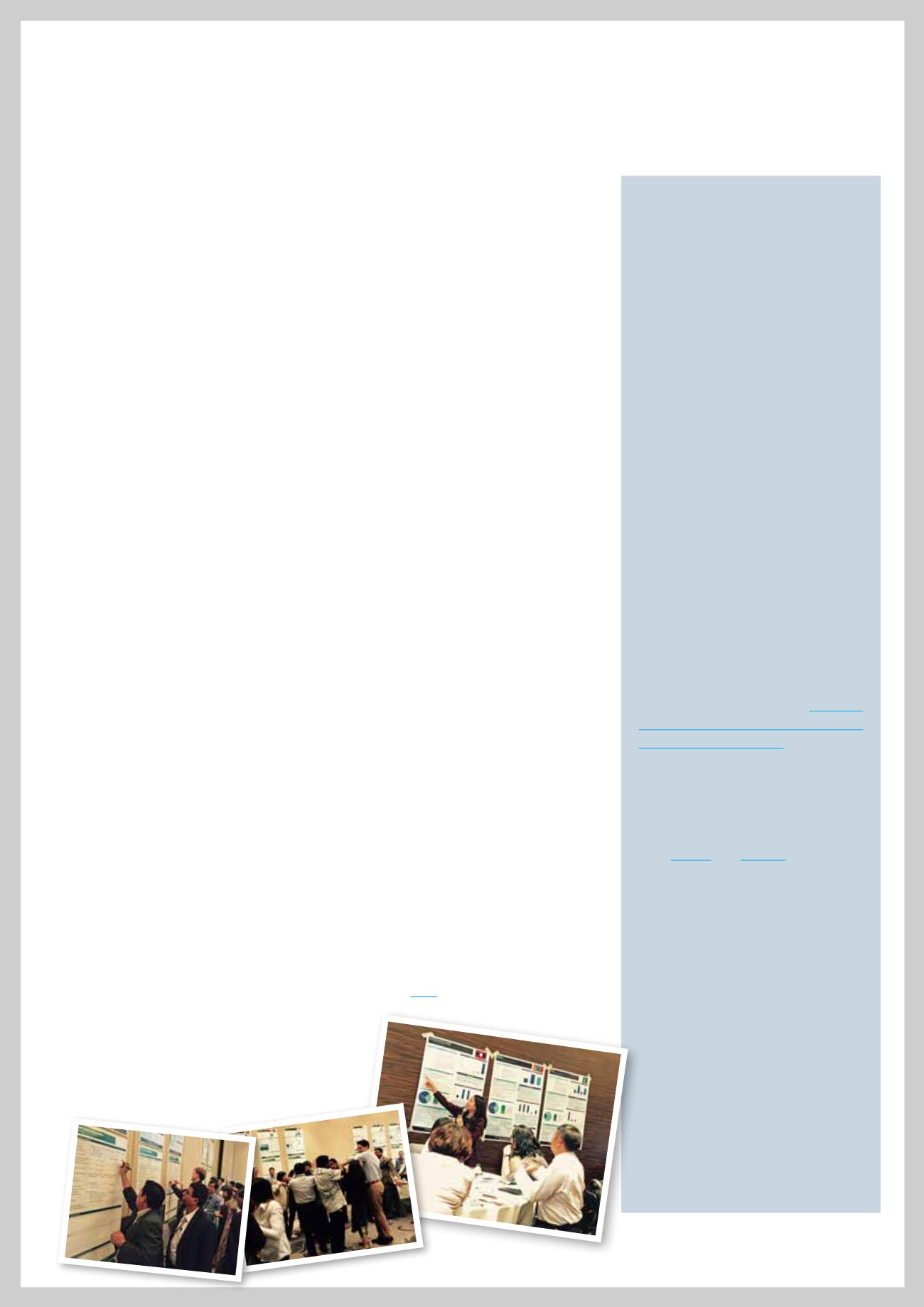
(Left) Activities at the two-day FAO workshop
in Bangkok, November 2015.